



Puistokatu 4 is organizing a residency program at Villa Karo in Benin during January–February 2027 for eight young sustainability researchers based in Finland and Nigeria. The residency is supported by the Nessling Foundation and organized in collaboration with the Centre for Sustainable Development at the University of Ibadan.
The residency hosted at Villa Karo offers selected researchers the opportunity to build an intercultural bridge and deepen their agency as researchers in an era of ecological crisis.
“The question of how to live a good life within planetary boundaries touches every one of us. That is why the global minority and majority must build a shared picture of the current situation and imagine desirable futures together. What does a good life look like when one continent must radically reduce its consumption while another has the right to development?” says Minttu Jaakkola, Executive Director of Puistokatu 4.
The residency is driven by the understanding that the global northern minority accelerates the ecological crisis. The consequences manifest in Africa as droughts, extreme heat, and floods in the daily lives of those whose natural resource consumption is lowest and adaptation resources most scarce. At the same time, Africa’s role in global politics and economy is rapidly growing. The continent’s population is expected to account for roughly half of global population growth in the coming decades, and politically active youth are already shaping governance and economic development across the continent.
”Building an ecologically sustainable future requires researchers who can see the world across disciplinary, national, and cultural boundaries. In this residency, we want to create space for collective thinking on what kinds of questions we should be asking on an interdependent planet,” says Iina Koskinen, Science and Executive Director of the Nessling Foundation.
The researchers for the residency were selected through a targeted application process held in August–September 2026. In Nigeria, the call was aimed at researchers at the Centre for Sustainable Development at the University of Ibadan. In Finland, the call was open to researcher members of Puistokatu 4 as well as researchers holding an individual grant from the Nessling Foundation.
“I am excited about this collaboration because the residency offers the participating young scholars much more than an academic exchange. It creates a space for trans-local learning, cross-cultural engagement, new research perspectives, deeper scholarly conversations, networking and greater visibility -experiences that can shape their research trajectories and professional contributions well beyond the residency itself,” says Olushola Fadairo, Director of the Centre for Sustainable Development at the University of Ibadan.
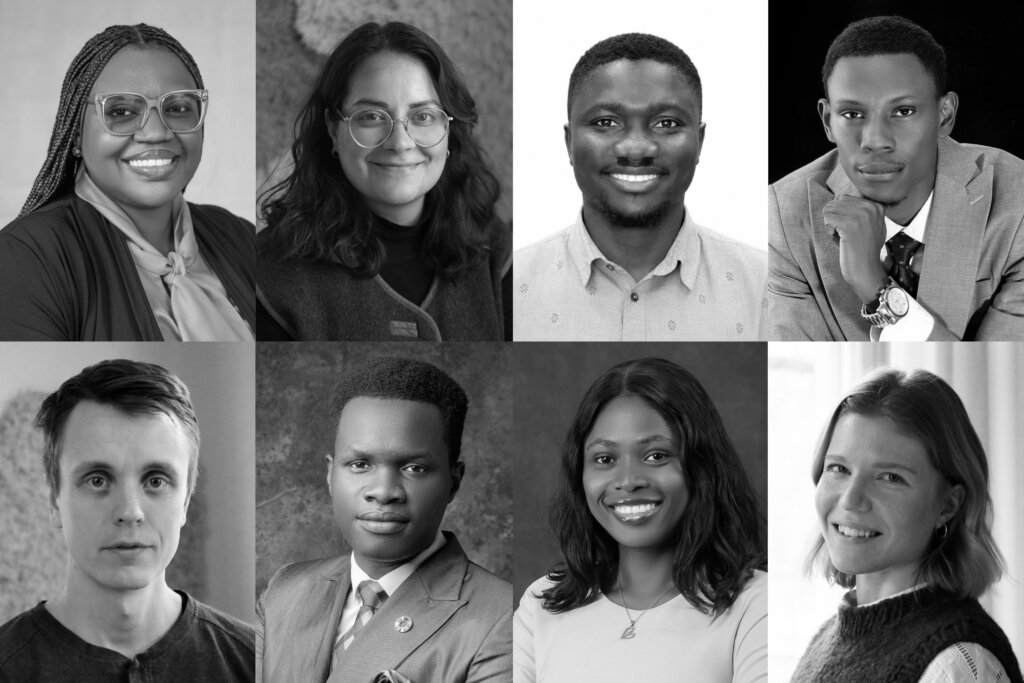
Researchers selected for the residency:
Riina Bhatia, University of Helsinki, Puistokatu 4, The Nessling Foundation
Peace Aburime, University of Ibadan
Vili Virkki, University of Eastern Finland, Puistokatu 4
Emmanuel Ola-Olowoyo, University of Ibadan
Katri Weckroth, Tampere University, Puistokatu 4
Oluwafemi Oyekunle, University of Ibadan
Samuel Awini, University of Helsinki, The Nessling Foundation
Opeyemi Odunola, University of Ibadan
***

“I am conducting research which tries to imagine how could an economy without growth work, and more precisely what kind of innovations and technologies we should have or not have in order to get to such economy.”

“My research explores the often-overlooked impact of climate-induced saltwater intrusion on water poverty and the sustainability of livelihoods in coastal communities.”

“I study how human pressures change the water cycle, and what consequences do these changes have in the Earth system.”
“I am interested in how digital transformation can improve economic and social opportunities, strengthen access to knowledge and services, and support more sustainable ways of living.”

“My PhD addresses sociocultural dynamics in the shift from meat overconsumption to plant-based food, which contributes to an eco-socially sustainable food system.”

“My PhD looks at what crossing of the planetary boundaries means at household level: how farming, livestock, and fishing households in Nigeria absorb shocks, and why some withstand it.”

“Elephants have long been viewed as damaging vegetation and potentially reducing carbon storage. My PhD tests whether they may instead be climate allies, and when protecting them can support carbon storage and biodiversity.”

“Rather than treating food security and sustainability as competing priorities, my work seeks synergy reducing crop loss and waste through regenerative and agroecological practices.”